

‘Disgusted with the way things stand ...’ Longford court solicitor discusses strike
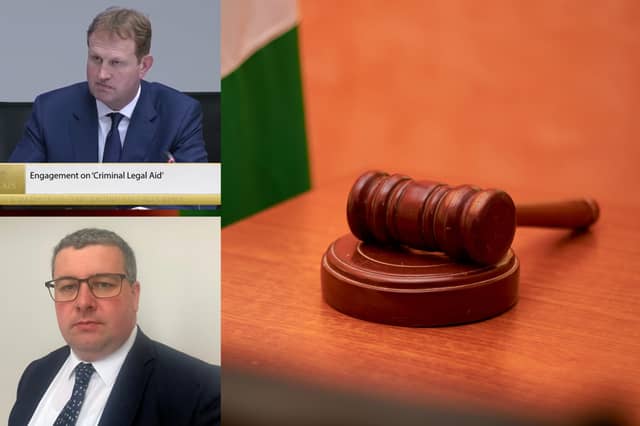

Solicitor John Anderson is a regular practitioner in Longford District Court
There’s a lot of misconceptions about the legal aid system, and even more about the solicitor’s strike that has sprung from the legal aid changes introduced on July 1.
Solicitor John Anderson, a regular practitioner in Longford District Court and a member of the Law Society’s Criminal Law Committee, spoke to the Longford Leader about the situation and his disgust as a Fianna Fáil man with the actions of this government regarding the strike.

Referencing the new changes, he describes as “unfair” the fact that a solicitor may not even receive payment for their work. John explains that under the new system, a solicitor could spend a significant amount of time preparing a case and attending multiple hearings but if a client decides to change to a different firm, the payment will be assigned to the new solicitor.
As John says, “There’s no job in Ireland or any part of the world that would expect you to do something for free on the basis that you might get paid at the end. You can't run a business that way.”
“If the court deals with the case on the first day then you're guaranteed your payment. If it's adjourned any length of time then you may not get paid. The really hard part about it is that 80% of the adjournments are at the hand of the state. You could be waiting for DPP directions; the Garda might not be available; a file might not be in court or the Judge may require a medical report.”

John adds, “Sometimes a Judge might want to put matters back six months to monitor the accused, to see if they’ll re-offend. If that happens now under this current system, there'll be huge objections from defence solicitors because they'll want the case finalised.”
“They will want it dealt with because they don’t know if the client will even turn up on the next occasion, and in that situation, they might not get their fee. We shouldn't be vested in the outcome of the case. That's why it really stings us. We have no control on a lot of the adjournments.”
“I can hand on heart say I have never once asked for a case to be adjourned for the purposes of legal aid or to get the extra €60. It just isn't economical to be adjourning the case for that purpose.”
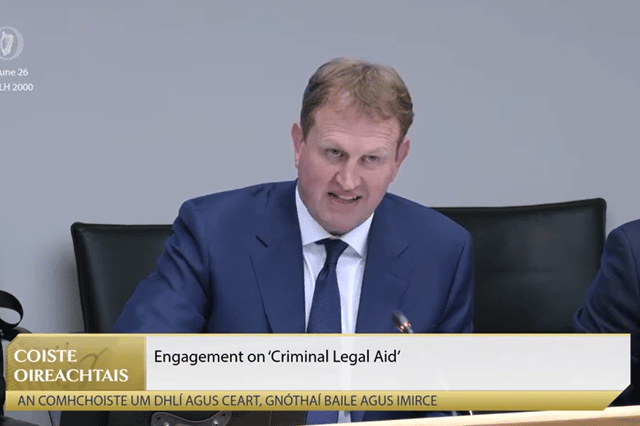
“When you take out tax and the cost of physically bringing that file back, notifying the client, travelling to court, all for the sake of €60? It doesn't make sense. We're happy to deal with the case as quickly as possible where it will allow.”
Solicitors like John who have to travel to court in another county are even more exposed to incurring a financial loss in the event of a legal aid client jumping ship to another solicitor or firm.
“If we take on a case in Longford, we could be there ten times if there’s adjournments but if we’re not there on the final occasion, then it will actually end up costing us money because we've had to travel to the court for those hearings,” he explains.
Minister O'Callaghan, who appeared before the Oireachtas Justice Committee last month, adopted the stance that defence solicitors should ask the court to strike out a case in the event of the state being unable to proceed. The very suggestion has understandably appalled members of the profession.
In protest of the new system, legal aid solicitors have been withdrawing their services since June 17. A significant number of solicitors have even resigned from the legal aid panel. Currently, no legal aid cases are being heard, with Judges nationwide postponing matters until the strike action concludes.
Says John, “The fear that I have at this moment is that even though we're all standing united, albeit it's all individual decisions to do so, the Minister for Justice said before the Justice Committee that he’s confident there’s young solicitors that are more than happy to work on the legal aid board panel for the current rates he has imposed.”
He added, “That's the situation he's hoping for; that the profession will not stand united and that if someone like myself leaves the legal aid board panel, which I’m strongly thinking about doing, then I may lose my clients to other firms who decide they’re willing to proceed with this new system.”
“It's just ridiculous. I would be Fianna Fáil myself and I would always regard myself as that, but I’m disgusted, as things stand at the moment.”
With the Department of Justice refusing to compromise, morale in the profession is low. Says John of the government, “It's a dictatorship. That seems to be the case, which I would have never thought until this last year.”
“If you look at the fuel protest, and the levels people had to go to get any bit of support. It was wrong that so many protests and disruption had to happen over those couple of days. This is similar. This is wrong. I enjoy what I do. I absolutely love the District Court. I love going into the District Court and I love trying to do the best I can do for a client. It just feels now like I'm letting them down.”