

Cleaner waters and stronger wastewater services for Longford communities


Uisce Éireann is investing in wastewater services across Longford to protect the local environment and support communities as they grow. This includes a major investment of €23 million to upgrade the Ballymahon Wastewater Treatment Plant
CLEANER waters, a healthier environment and more resilient wastewater services are making a real difference for communities across Longford, thanks to continued investment in local wastewater infrastructure.
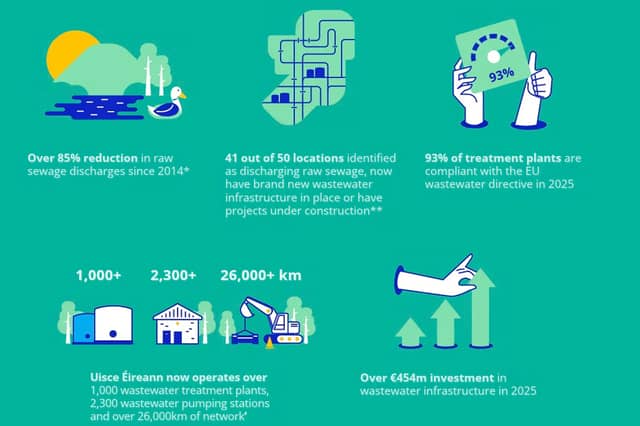
This local progress is reflected in the latest Environmental Protection Agency (EPA) report, which shows that 93% of Uisce Éireann’s wastewater treatment plants nationally are now compliant with EU standards.
They are investing in wastewater services across Longford to protect the local environment and support communities as they grow. This includes a major investment of €23 million to upgrade the Ballymahon Wastewater Treatment Plant which began this year. The upgrade will improve the quality of treated wastewater discharged into the River Inny, ensure compliance with wastewater discharge regulations, and support sustainable growth and development in Ballymahon for decades to come.
These improvements are making a real difference locally, but Uisce Éireann recognises there is more work to do. The focus remains on addressing challenges, investing where improvements are needed most and delivering the wastewater services that communities expect and deserve.
Niall Horgan, Uisce Éireann’s Wastewater Compliance Senior Manager, said:
“Our wastewater treatment plants and services are vital to people’s quality of life, and that is what drives our work every day.
“The progress we are seeing in Longford shows what sustained investment can deliver for communities and the environment. We have made significant progress in recent years, but we know there is more to do. We are continuing to invest in communities right across the country, modernising wastewater services, protecting local waterways and ensuring communities can grow and thrive while safeguarding the environment.”
Uisce Éireann also completed construction works on the Athlone Main Drainage Scheme, a landmark €114m project which ended a decades-long issue of sewage overflowing into the town and the River Shannon during heavy rainfall.
Their 2025 wastewater investment of €454.4m represents an increase of more than €120m since 2020 when €333m was invested. This brings the total investment since then to more than €2.5bn which has helped to modernise services. To date, they have built new wastewater infrastructure for 41 towns and villages across the country to end the discharge of raw sewage into the environment, and their teams continue to work to progress the remaining few locations.
Mr Horgan also acknowledged the EPA’s concerns about operational incidents. Many of these issues are linked to the age and condition of parts of the wastewater system, which in some areas were not designed to meet the demands placed on the network today. Addressing these challenges is a priority, but upgrading infrastructure on this scale takes time.
Much of Ireland’s wastewater infrastructure has been in place for decades and requires significant investment and modernisation. The network is extensive, serving communities across the country through more than 1,000 wastewater treatment plants, 2,300 pumping stations and over 26,000 kilometres of wastewater pipes.
As well as infrastructural upgrades, Uisce Éireann have also developed new organisational structures designed to strengthen operational oversight, improve incident response, and enhance long-term resilience of their assets.
But they need the public’s help in playing their part to protect the wastewater network.
“Unfortunately, one of the challenges we continue to face, and we saw a number of these incidents in 2025, is the disposal of inappropriate materials into our wastewater network. Simple actions at home and in businesses can make a real difference. Fats, oils, grease and other unsuitable materials can cause blockages and put additional pressure on the wastewater network.
“Disposing of these items correctly helps protect our infrastructure and allows us to focus our resources on maintaining and improving services for communities," explained Mr Horgan.