'Pure nostalgia' - Throwback pictures from the last time Ireland reached World Cup in 2002
Search


26 Mar 2026

Please allow ads as they help fund our trusted local news content.
Kindly add us to your ad blocker whitelist.
If you want further access to Ireland's best local journalism, consider contributing and/or subscribing to our free daily Newsletter .
Support our mission and join our community now.
To continue reading this article, you can subscribe for as little as €0.50 per week which will also give you access to all of our premium content and archived articles!
Alternatively, you can pay €0.50 per article, capped at €1 per day.
Thank you for supporting Ireland's best local journalism!

Midland Hearing Care has the solution for your unique hearing requirements

'Stick, Click, Hear, ADHEAR.'
At our clinic we see patients who are suitable for conventional receiver-in-ear (RIC), behind-the-ear(BTE) and custom (in canal) hearing aid technologies.
At times, we encounter more complex audiological cases, where patients may be contraindicated for conventional hearing aid technology.
These cases may include children and adults with a conductive hearing loss and single-sided deafness. Conductive hearing loss may be due to changes to ear anatomy, namely: atresia, microtia or chronic middle ear fluid making the fitting of conventional hearing aids impossible.
At our clinic we have come across pediatric and adult cases of atresia and microtia.

What is atresia - this is a birth malformation resulting in the absence or closure of the external ear canal. The middle ear bones may be affected including the narrowing of the ear canal. Atresia is Latin for ‘’absence of an opening’’.
What is microtia - this is a birth malformation affecting the outer ear. A microtia ear is often smaller in size, can have a ‘’peanut shaped’’ appearance, only have a small ear lobe, or be completely absent at birth.
Microtia is Latin for the words ‘’micro and otia’’, meaning “little ear.” Microtia can affect one ear (unilaterally) or both ears (bilaterally). Microtia occurs in every 1 out of 6,000 to 12,000 births.
The right ear is more commonly affected. Microtia is often accompanied by atresia and can present in varying grades.
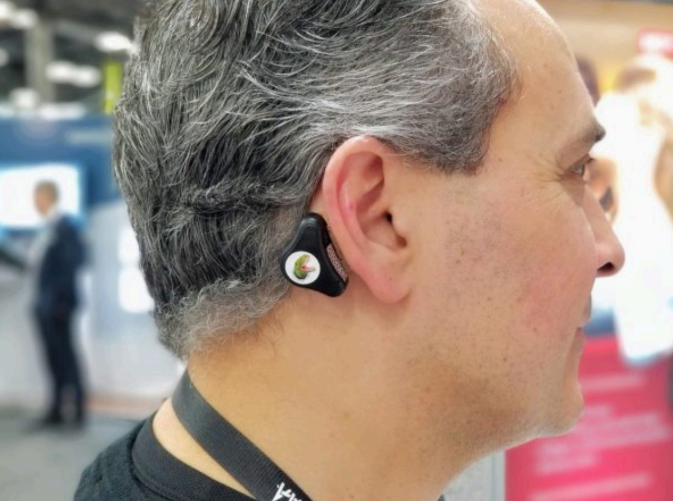
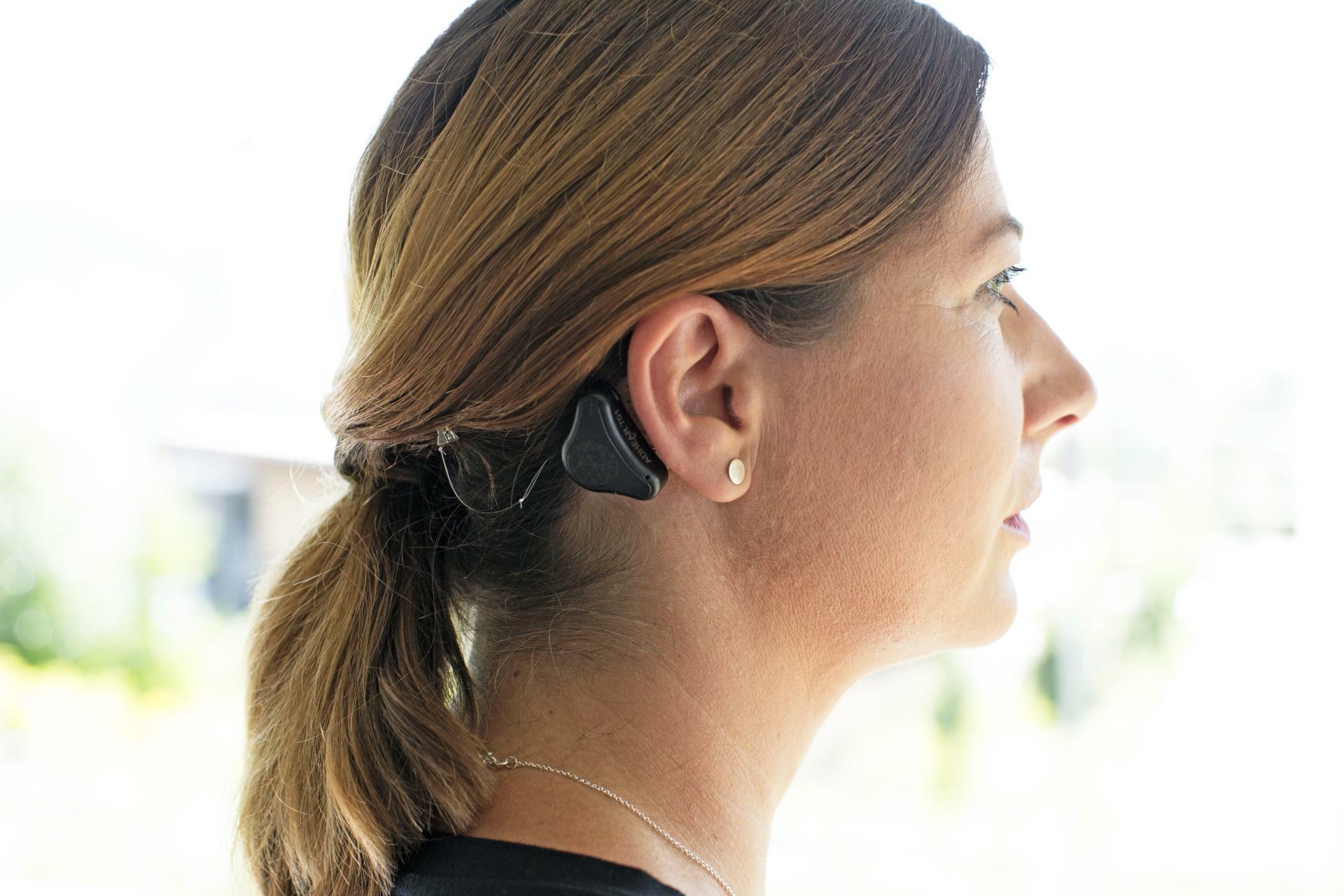
What is the solution? For suitable candidates, ADHEAR is a revolutionary non-surgical bone conduction system, placed on the skin behind the ear. Traditional hearing aids amplify sound, whereas ADHEAR uses bone conduction to send sound through the skull bones to the inner ear. This is the same principle used in readily available soft headband bone conduction hearing aids(non-surgical option) and ‘’BAHD’’ bone anchored hearing devices (requiring surgery).

Is ADHEAR different from a cochlear implant? ADHEAR is for users with conductive hearing loss. A cochlear implant is suitable for people with severe-to-profound sensorineural hearing loss and is surgically implanted and uses electrical signals to stimulate the cochlea (inner ear).
The ADHEAR system consists of a bone conduction audio processor that is kept in place on the head with the ADHEAR adhesive adapter. ADHEAR is battery operated, using a size 13 zinc-air battery, lasting 1 to 2 weeks.
ADHEAR has a tamper-proof battery door making this technology safe to use for young children and those with special needs.
The adhesive adapter looks like a small beige or brown ‘plaster’ positioned behind the ear and can usually be worn day and night and should be changed once or twice a week.
ADHEAR is available in three colours: namely Dove Silver, Terra Brown and Simply Black. For children, plastic sleeves and a range of colourful stickers are available to customise ADHEAR.
How does ADHEAR work?
If looking for a solution for your unique hearing requirements, please contact Midland Hearing Care for our expertise.
Please get in touch:
Find us on Facebook or visit https://www.midlandhearingcare.com/
Email us: info@midlandhearingcare.com Landline: 043 336 8029
Clinic hours: By appointment only. Monday to Friday 9am – 5pm. Please note: our clinic is closed for lunch 1pm-2pm daily.
*Sponsored Content

Subscribe or register today to discover more from DonegalLive.ie
Buy the e-paper of the Donegal Democrat, Donegal People's Press, Donegal Post and Inish Times here for instant access to Donegal's premier news titles.
Keep up with the latest news from Donegal with our daily newsletter featuring the most important stories of the day delivered to your inbox every evening at 5pm.

This publication supports the work of the Press Council of Ireland and Office of the Press Ombudsman, and our staff operate within the Code of Practice of the Press Council. You can obtain a copy of the Code, or contact the Council, at www.presscouncil.ie, Lo-call 1800 208 080 or email: info@presscouncil.ie.