

Longford Leader Farming: Time to re-think Land Drainage?
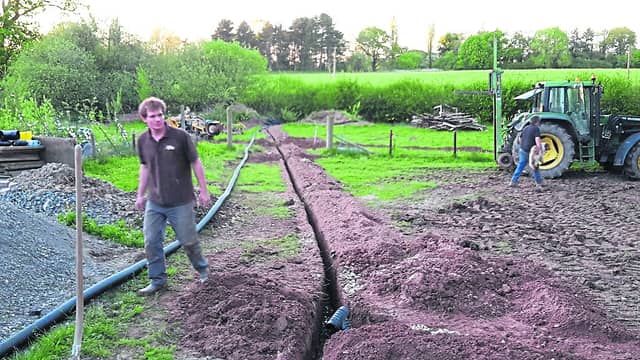

Land Drainage event on the farm of Pat and Paul Molihan in Oldtown, Ardagh on Wednesday September 26 at 5pm
It can be very hard to work out what is happening underground just by standing on the field surface. Before you know what type of drainage system to install, you need to examine the soil profile. Dig test pits or holes with a digger to a depth of around 6-7 feet. The hole needs to be wide enough to safely enter and examine its soil layers.
Make sure sides of test pit are secure. The idea is to work out the layers/type of soil present and whether it is free draining or not. You are also trying to locate how far down the water table is. After you work out where the problem is you can design a drainage system to help dry out the field.
There are 2 types of drainage systems: (1) Shallow drainage system (2) Deep drains. The shallow drainage system is the one most people are familiar with and involves installing shores to a depth of 2 ½ feet. The second drainage system is where deep drains are installed at a depth of 5-6 feet. This system is usually needed where a high water table is the problem.
If you are interested in learning more about land drainage we are holding a Lime and Land Drainage event on the farm of Pat and Paul Molihan in Oldtown, Ardagh on Wednesday September 26 at 5pm.
We will have stands on drainage, soil compaction and lime/soil fertility. Guest speakers will be discussing how to decide on the type of drainage needed on your farm, doing up a drainage plan, soil compaction and costs involved. There will also be a machinery demo on the day on the installation of shallow and deep drains.