

Longford Farming News: Lime, the small investment that unlocks big fertility gains
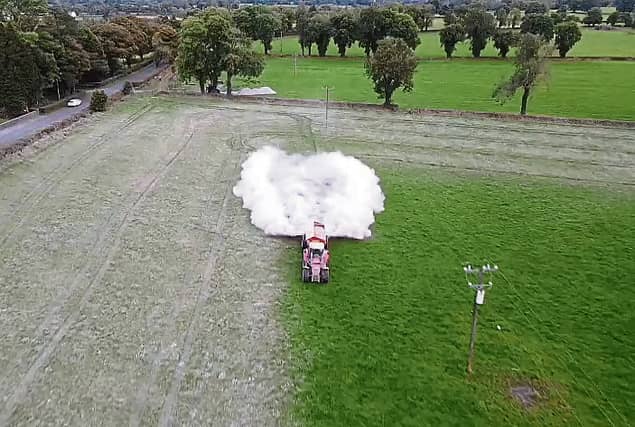

Applying ground limestone corrects acidity, boosts biology, and unlocks nutrients in soil
By Enda O'Hart, Organic Advisor, Teagasc, Longford Roscommon
Soil pH is the foundation of soil fertility. On many Irish farms, pH has slipped below target, locking up nutrients and cutting the return from fertiliser and slurry.
Applying ground limestone corrects acidity, boosts biology, and unlocks nutrients already in your soil.
Key benefits
More home-grown grass and crops- Liming acidic soils typically increases grass production by 1.0–1.5 t DM/ha per year.
Release of soil nitrogen- Correcting pH towards 6.3–6.5 increases soil N supply by up to 70–80 kg N/ha/year, improving the efficiency of applied N and cutting fertiliser bills. Unlocks P and K- Lime lifts P availability and improves the response to both slurry and chemical P.
Trials showed liming alone increased soil test P, and P plus lime delivered the highest yield response.
Faster nutrient cycling- At optimal pH, soil microbes are more active, enhancing decomposition, mineralisation, and root growth.
Return on investment
A small, annualised cost (€25–30/ha) routinely returns €150–€225/ha through extra grass or grain—€4–€10 back for every €1 invested.
Climate and emissions- By replacing chemical N with released soil N, liming can help lower farm nitrous oxide emissions. While 1 t of lime emits 0.4t CO2e at application, reduced fertiliser N use and higher Nitrogen use efficiency outweigh this over time.
Practical pointers
Target pH: grassland 6.3+ (6.8–7.0 with clover); cereals 6.5; beet/beans/peas/oilseed /maize 6.8–7.0; peat soils 5.5–5.8; high Mo soils 6.0–6.2. Apply lime as per soil tests; don’t exceed 7.5 t/ha in one pass; split larger rates.
Avoid slurry or urea for several weeks after liming (apply them first, then lime 7–10 days later).
Spread whenever ground and weather suit, low grass covers aid rapid wash-in. Leave a period of 3 months between applying lime and cutting silage.
On grazing fields remove stock while the spreading operation is occurring, and grazing can recommence once rainfall has washed the lime off the grass.