Search


01 Apr 2026
Search
01 Apr 2026

Please allow ads as they help fund our trusted local news content.
Kindly add us to your ad blocker whitelist.
If you want further access to Ireland's best local journalism, consider contributing and/or subscribing to our free daily Newsletter .
Support our mission and join our community now.
To continue reading this article, you can subscribe for as little as €0.50 per week which will also give you access to all of our premium content and archived articles!
Alternatively, you can pay €0.50 per article, capped at €1 per day.
Thank you for supporting Ireland's best local journalism!

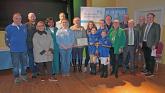
Cllr Seamus Butler, Senator Micheál Carrigy, Minister Peter Burke, Francie Gorman IFA President, John Sheridan (Chairman of Longford IFA) and Deputy Joe Flaherty Picture; Shelley Corcoran;

Last week the Chairman of the Irish Farmers' Association National Fruit and Vegetable Committee, Niall McCormack, hosted a delegation of political representatives to his farm in a bid to emphasise difficulties faced by the horticulture sector.
Minister Peter Burke, Deputy Joe Flaherty and Senator Micheál Carrigy were invited to the McCormack farm with the goal of underlining the importance of supporting an agriculture industry crucial for long term food security.
The horticulture industry is the fourth largest sector of Ireland's agriculture business and is an essential component of the supply of local seasonal produce to Irish consumers. The horticulture sector is valued at €529 million.
The IFA's Horticulture Committee issued the invitation to the public representatives to highlight many of the challenges faced by the industry.
The McCormack family have been farming in Killenbore, Colehill, Longford for seven generations, spanning over 200 years.
Niall McCormack began growing strawberries in 1990, followed by turnips and leeks in 2010 and added raspberries and blueberries in 2015.
“We use the most up-to-date methods of production to produce a nutritious and healthy crop. McCormack Fruit produces about 70 tonnes of strawberries and about three tonnes of raspberries. Our market is throughout the West of Ireland and beyond. All the fruits we supply are grown here on our own Bord Bia approved farm,” Niall told the Leader.
The horticulture sector is experiencing significant difficulties at present: “Labour, weather, supermarket undercutting, low-cost selling of produce in supermarkets. This seems to have become a perennial problem,” Niall said.
Other difficulties include substrate availability and spiralling input costs, but the problems with finding workers for the horticulture industry are notable. It's an extremely labour-intensive industry, with labour costs accounting for up to 50% of total variable costs.
One way political leaders have taken action is the Employment Permits Act 2024 which introduces a new Seasonal Employment Permit commencing in early 2025. This is a short-term employment permit for non-EEA nationals to work for a maximum of seven months per calendar year in seasonally recurrent employment.
“It has been a slow process,” Niall says of the measure, “A lot of growers that have gone out of business. The legislation has gone through the Dáil and the Seanad. We're waiting for the last six months for a steering committee to be set up. The IFA wants to sit down with the Department of Enterprise, Trade and Employment and put together a scheme that's fit for purpose for horticulture.
“This seasonal work permit scheme is in every country in Europe. We're one of the last in Europe to go down this route,” the Horticulture Committee chair explained.
Data suggests Ireland is the second most food secure country in the world, ranking behind Finland out of 113 countries. That said 83% of the fruit and vegetables we consume are not Irish.
Niall believes it's vital for long term food security to address the imbalance: “I think there's a lack of political will,” he tells, “I don't think they realise how important it is. Because within 10 or 15 years, we could have a very, very small horticulture sector.”
This summer Europe experienced significant weather problems: “Water shortages and hot weather in Europe has impacted on harvest.
“They're going to keep their own fruit and veg first. We're the last in line. It's quite important we get our own horticulture sector into a stronger position.
“There is a national horticulture strategy. That strategy hopes to achieve an increase of 30% in horticulture projects. This couldn't happen without a seasonal work permit scheme,” he outlined.
Niall advises a two pronged approach; supporting existing farmers and developing the sector: “A lot of the growers in the country are quite old now. There's very few young people coming into it.
“A lot of young people are looking at the problems and are not interested because of all the problems and the narrow margins.”
All farmers are aware of the travails of 2024: “This has been a tough year. Weather has been hard. Cold weather, crops have been slow coming in. Crops suffered because of the lack of heat, especially in June. And the nights were cold, resulting in low yields. That could have an effect on supermarket shelves later on.”
The fruits of the visit by politicians to the McCormack farm have yet to be determined, however the need to ensure a strong indigenous Irish horticulture industry for long term food security is one that is very much on the menu.

Subscribe or register today to discover more from DonegalLive.ie
Buy the e-paper of the Donegal Democrat, Donegal People's Press, Donegal Post and Inish Times here for instant access to Donegal's premier news titles.
Keep up with the latest news from Donegal with our daily newsletter featuring the most important stories of the day delivered to your inbox every evening at 5pm.

This publication supports the work of the Press Council of Ireland and Office of the Press Ombudsman, and our staff operate within the Code of Practice of the Press Council. You can obtain a copy of the Code, or contact the Council, at www.presscouncil.ie, Lo-call 1800 208 080 or email: info@presscouncil.ie.