

A string to Longford's bow! New course attracts New York's education scene

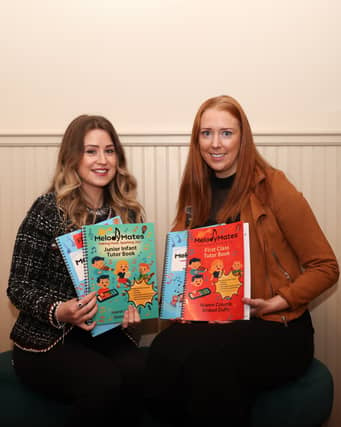

MelodyMates is going to introduce accessible, interactive music classes to primary schools
Classical harpist and pianist Níamh Columb, from Granard, and Sinéad Duffy, a classical pianist, came up with an idea for accessible instrumental music lessons for primary schools in Ireland.
What started off as a cup of coffee after a Christmas harp recital, has led to the opportunity to speak at a New York conference by the end of February, 2026.
Níamh Columb began learning the harp at the age of 11, having taken her lessons from the Royal Irish Academy of Music (RIAM), which she commuted for. By the age of 14, she was a resident harpist at Lough Rynn.
At 15, she was part of the National Harp Orchestra, and even completed her Grade 8 exam around that age. By 16, she was already starting to teach privately.
A born talent, Níamh later completed her RIAM teaching diploma, having previously done all the acquired grades (1-8), some which were done in the same year. She got distinctions for each one.
With the title of Associate, she can teach and prepare her students from Grade 8 and beyond, such as the senior certificate.
After that fortunate conversation with Sinéad, who is also a primary school teacher, it has led to MelodyMates–an initiative to tutor and guide teachers to produce engaging music classes with instrumental learning at its core. Even before its official launch in Ireland, it has gained traction in America.
“We have made online video tutorials so teachers can watch before teaching their class,” she detailed. “Teachers can teach themselves as they go along. We’ve got lesson planning materials. It shows them how they can integrate other subjects into their music lessons. With senior infants, reading the book We’re Going on a Bear Hunt, we can see it as a music lesson. Read this story as a stimulus for your lesson, but create a musical soundscape by using the sound words from the story. We give them planning tutorials, materials and step-by-step on how to teach the instruments from simple keyboard skills on glockenspiel to the soprano recorder. A nice variety of learning.”
MelodyMates’ method of teaching means that it benefits generations, for teachers will be able to develop their own skills in the provided instruments along with their pupils.
However, it was Christmas 2024 that helped her find a way to bridge the gap in music teaching in primary schools. Having been part of a luxury workshop in Coolamber House, it was then when she met fellow co-founder Sinéad. They talked about it over coffee, and had not even planned on launching it internationally so early on. Yet, support and appreciation came their way to get this initiative to a wider audience. A primary school from New York found their Instagram, asking if they could join the programme.
“They signed up to the pilot programme. They were recommending us to the New York district,” added Níamh.
With the pilot showing the effectiveness, 188 schools throughout New York have signed up. They are yet to launch it in Ireland as the two musicians are still writing the programme up. MelodyMates will be presented at the teaching conference in New York as interest in the States continues to expand.
“The interest snowballed from one school to several in New York. Not even in a month. That was a huge confidence boost for us. They’re very interested in more of the programme in the States.”
The future of MelodyMates looks promising. Níamh discussed what she would like to see in classrooms going forward with accessibility to a structured music programme.
“Essentially, music is sound. Sound is noise. Without noise, there’ll be no music. That’s what is lacking at the moment. In a lot of music lessons, children are watching a lecture online as opposed to instrumental learning. External music teachers are coming in for a short period of time. After that, there’s nothing. It’s just forgotten about until funds come through for another external tutor.
“It focuses more on instrumental learning and active learning as well,” she continued. “The children are actively learning music and not just sitting there. A lot of schools may have teachers who aren’t musically equipped or confident, music isn’t taught, a tutor is brought in and gone, or the kids put in front of an interactive whiteboard, like a lecture, telling you about music without learning through experience. Experiential learning is important as well with young children as they get bored very easily.”
From a simple idea that has led to global interest, both Níamh and Sinéad will be showcasing their programme to enhance and develop music education in schools.