

Shedding the Silence: Longford men hear 'enlightening' cancer survivor stories

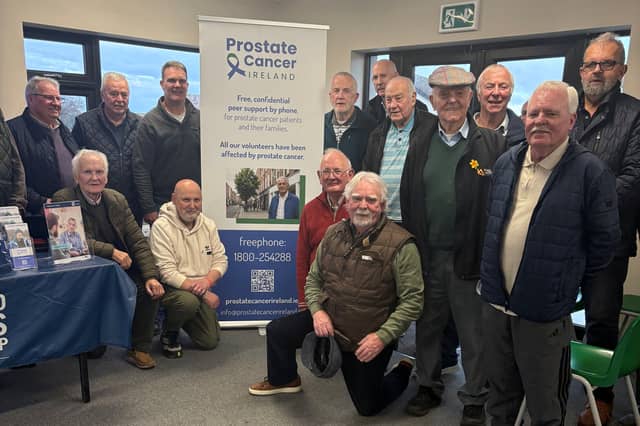

The event in Ardagh focused on encourage open conversations about men’s health and it was organised in association with Longford Town Men’s Shed and Longford Sports Partnership.
Almost 50 from men's sheds across county Longford gathered in Ardagh last week for a prostate cancer awareness talk where they heard stories from three resilient prostate cancer survivors.
The event at the clubhouse at Keenan Park was organised in association with Longford Town Men’s Shed and Longford Sports Partnership and the information talk focused on encourage open conversations about men’s health.
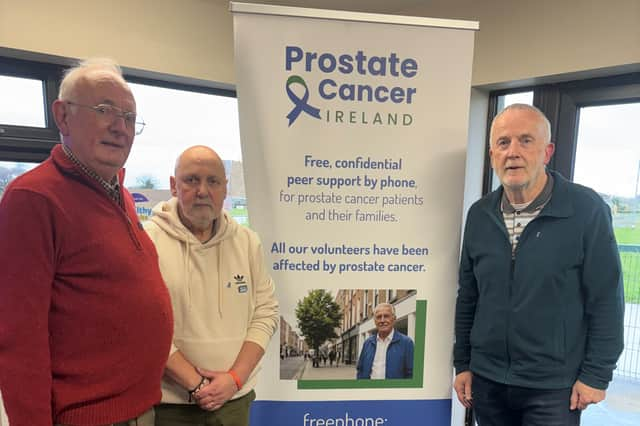
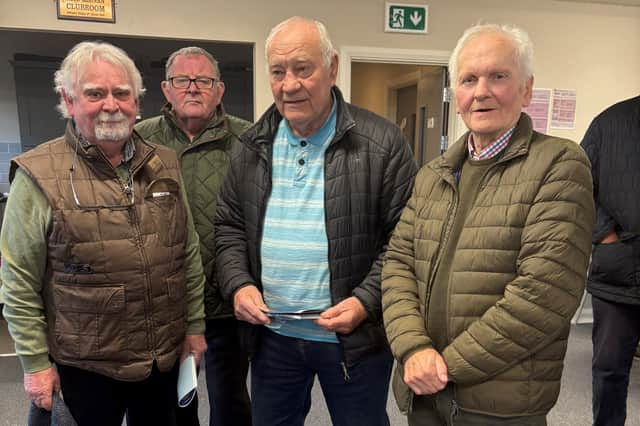
There was a hugely positive reaction from the men to the personal and inspiring stories delivered by Jim Blighe, John Foley and , Tom Hope of Prostate Cancer Ireland on Wednesday afternoon.
Longford Town Men's Shed chair Peter Duffy said he found the event very cordial, informal and beneficial.
"It was superb, it's actually 27 years since I had it [cancer].
"I had just ran a marathon and I was 53 years old.
"But the key thing is it hasn't killed me."
Treasurer Bryan McCormack said in their shed they have 'five lads who have either gone through it or came through it'.
Bryan said they have 50 members and there were various sheds in attendance in Ardagh and it was very important to keep raising awareness and the event was 'very enlightening'.
Some of the symptoms of prostate cancer include passing urine more often than usual and waking up multiple times at night, a weak urine stream or a flow that starts and stops and difficulty starting to urinate or straining to empty the bladder.
The first speaker Jim Blighe (69), from Naas, explained Prostate Cancer Ireland is a small organisation that is run entirely by volunteers who are all prostate cancer patients.
"What we do is exactly what it says on the tin, our main purpose is to be available and provide peer support, in other words someone to talk to for someone who has just been diagnosed with prostate cancer."
Jim said patients are diagnosed by a GP or consultant and they are often then wondering where to go or where to find out information and that is where they can help through their website or the freephone number, which is their main focus.
He said he was 'lucky' that at 62 years of age he had a coronary problem that led to him having regular blood tests for about two years and it was then discovered he had high PSA (prostate-specific antigen) levels.
A PSA test is a simple blood test that measures the level of prostate-specific antigen—a protein produced by normal and cancerous cells in the prostate gland—to check for prostate conditions or screen for prostate cancer
Jim said it was recommended that men aged 50 and over should begin PSA testing and he addressed the men and advised them to talk to their GP and ask for a PSA test once a year.
"It's the first stage in the process to check if there is a problem and there could not be a simpler way to do it.
"But if you have a family history, if you have a father, an uncle or a brother that has already had prostate cancer that is an additional warning and they are the key things to be aware of, the family history and age."
Jim said his PSA levels were always well below the range for a man in his 60s, but in a period of three months it doubled.
"It was a very rapid increase and this was a sign that there was something going on."
The second speaker John Foley (62),a retired civil servant from Tullamore, County Offaly, was diagnosed with aggressive stage IV prostate cancer in 2020 at the age of 56.
John said his consultant asked him to return after some tests including an MRI were carried out and to bring his wife with him.
"At that visit the consultant informed me that I had cancer cells in one sample of 12 samples taken," he added.

John said this came as a complete shock to him as he had no symptoms or difficulty with urology function.
He was given the option of surgery to remove the prostate which carried almost a 30% risk of incontinence or active surveillance (a blood test and check-up every six months) and he opted for active surveillance as he 'did not want to risk incontinence unless absolutely necessary'.
He added, "The most challenging issue for me was accepting that I had prostate cancer, I had not caused it, I didn't drink or smoke and I exercise regularly."